(Part 3 of the Bhutan Trek Series)
Go back to Part 2….
Continuing Up the Paro Valley
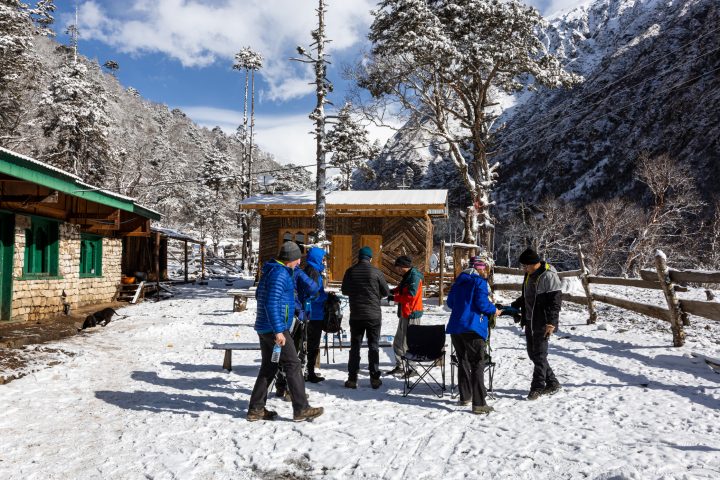
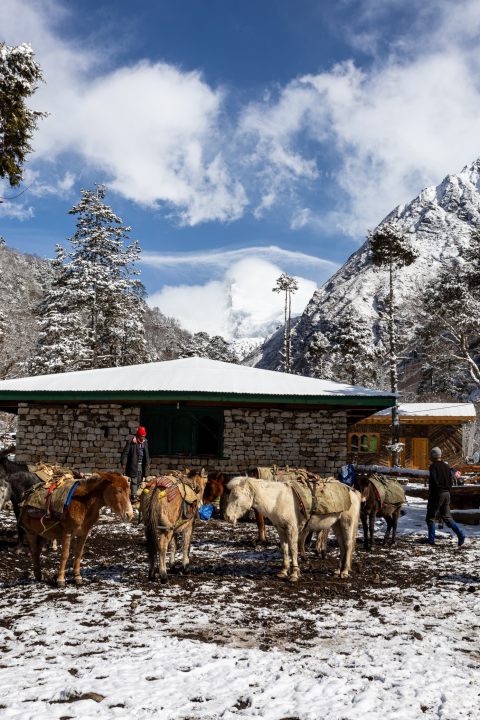
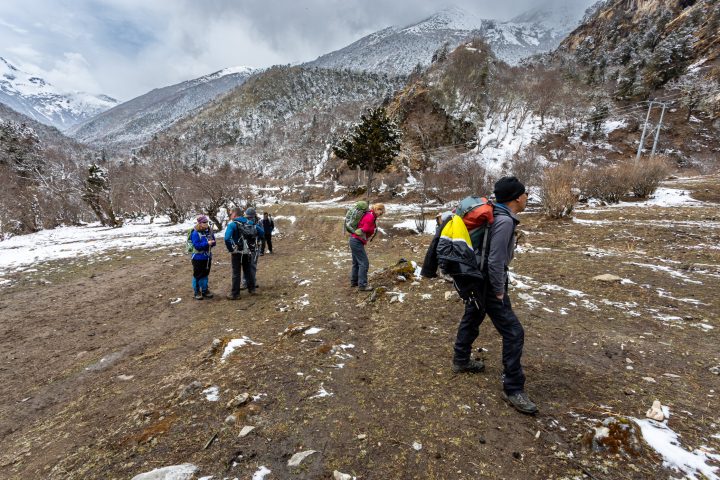
After a wet, snowy first day trekking up the Paro Valley—and an even colder night sleeping in the tent—we woke to a simple but welcome breakfast prepared over a campfire at the stone hut in Thang Thanka.
The snow had continued off and on through the night, and it lingered into the morning as we packed up and prepared to continue toward Jomolhari Base Camp.
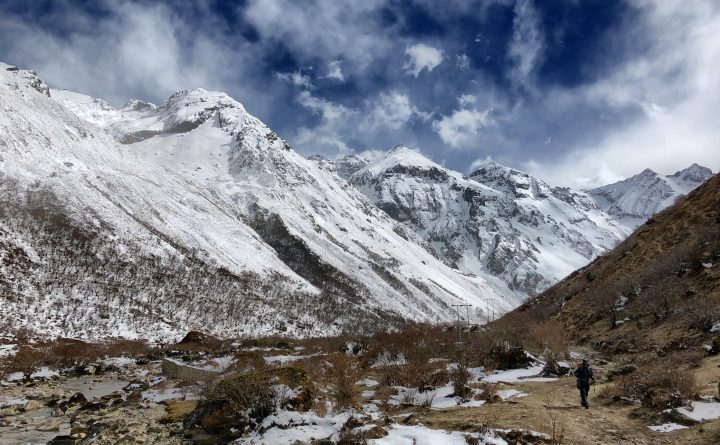
It wasn’t a dramatic start to the day—just steady progress as we moved deeper into the valley, following the river through increasingly remote terrain.
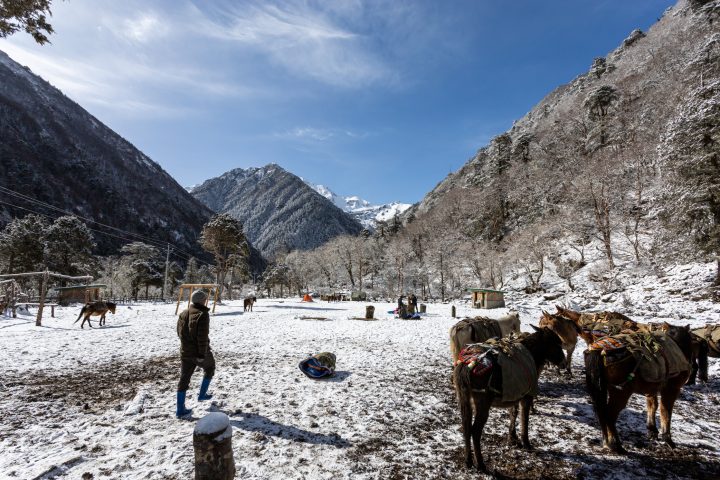
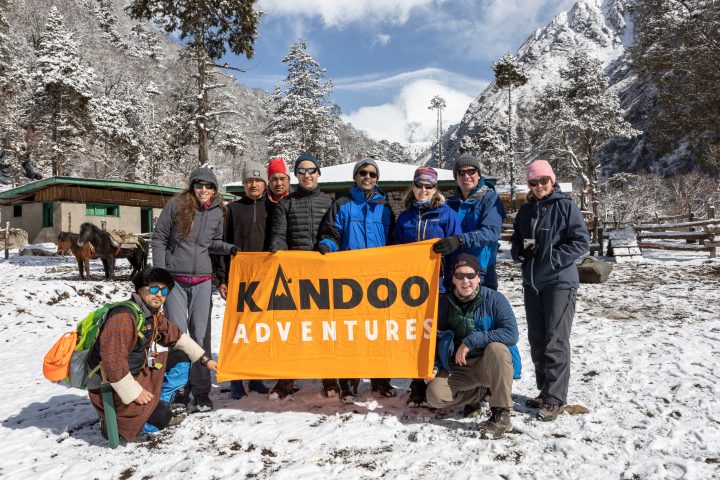
We stopped for lunch on a flat rock platform along the trail, where the porters once again managed to prepare a hot meal.
It was cold and windy, and we didn’t linger long—but having something warm to eat made a huge difference.
Visiting the School Among Snow Leopards
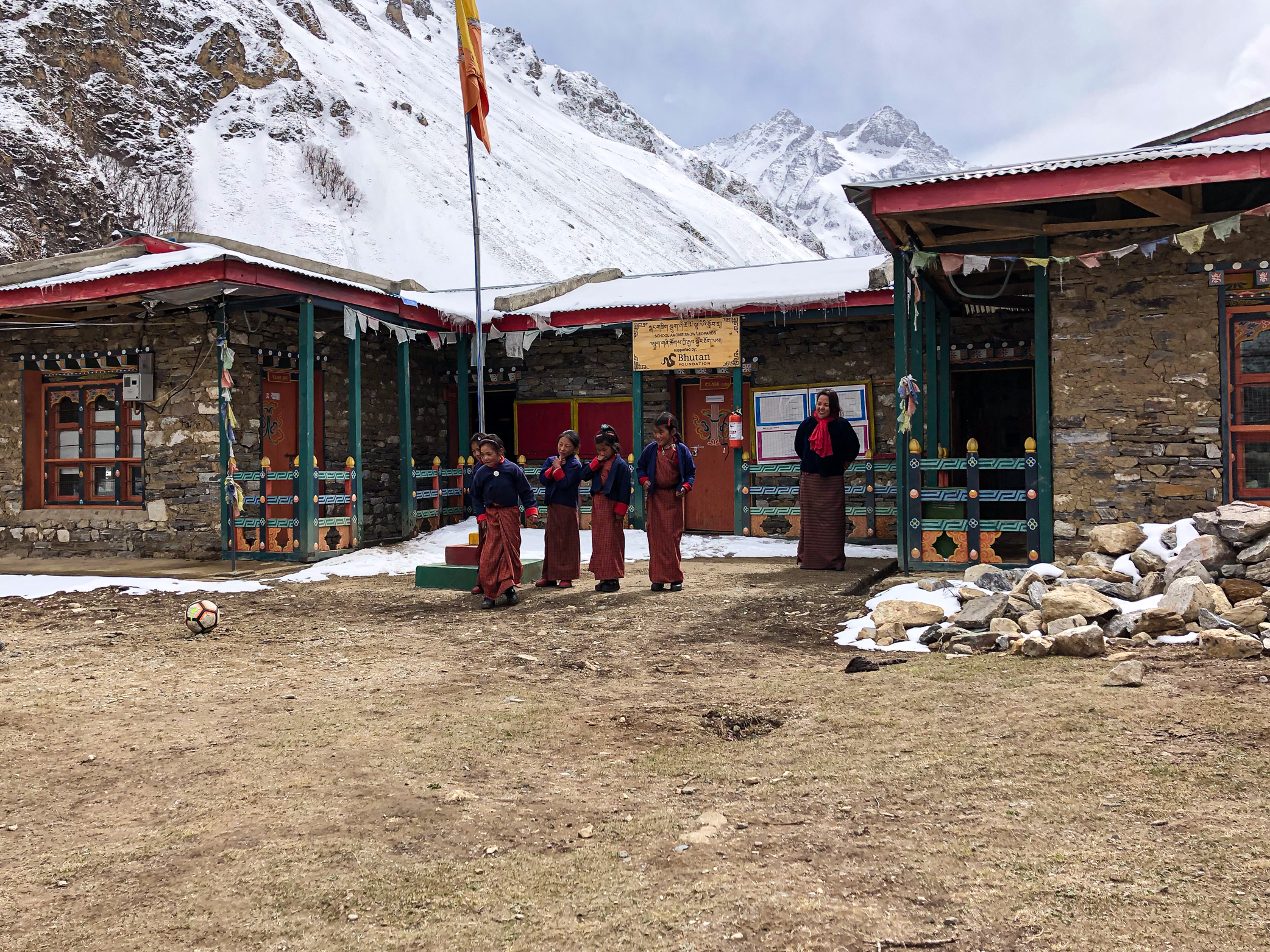
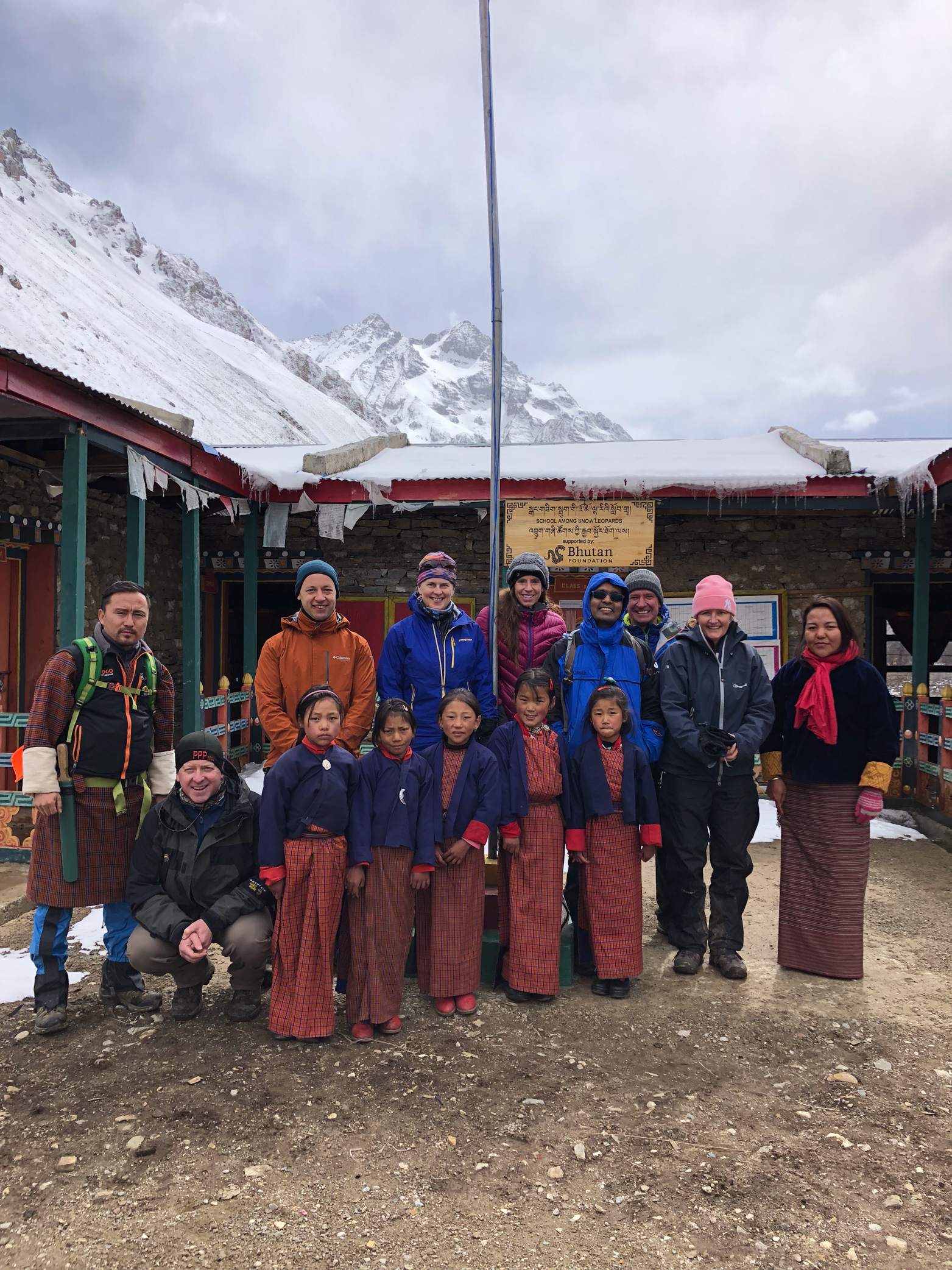
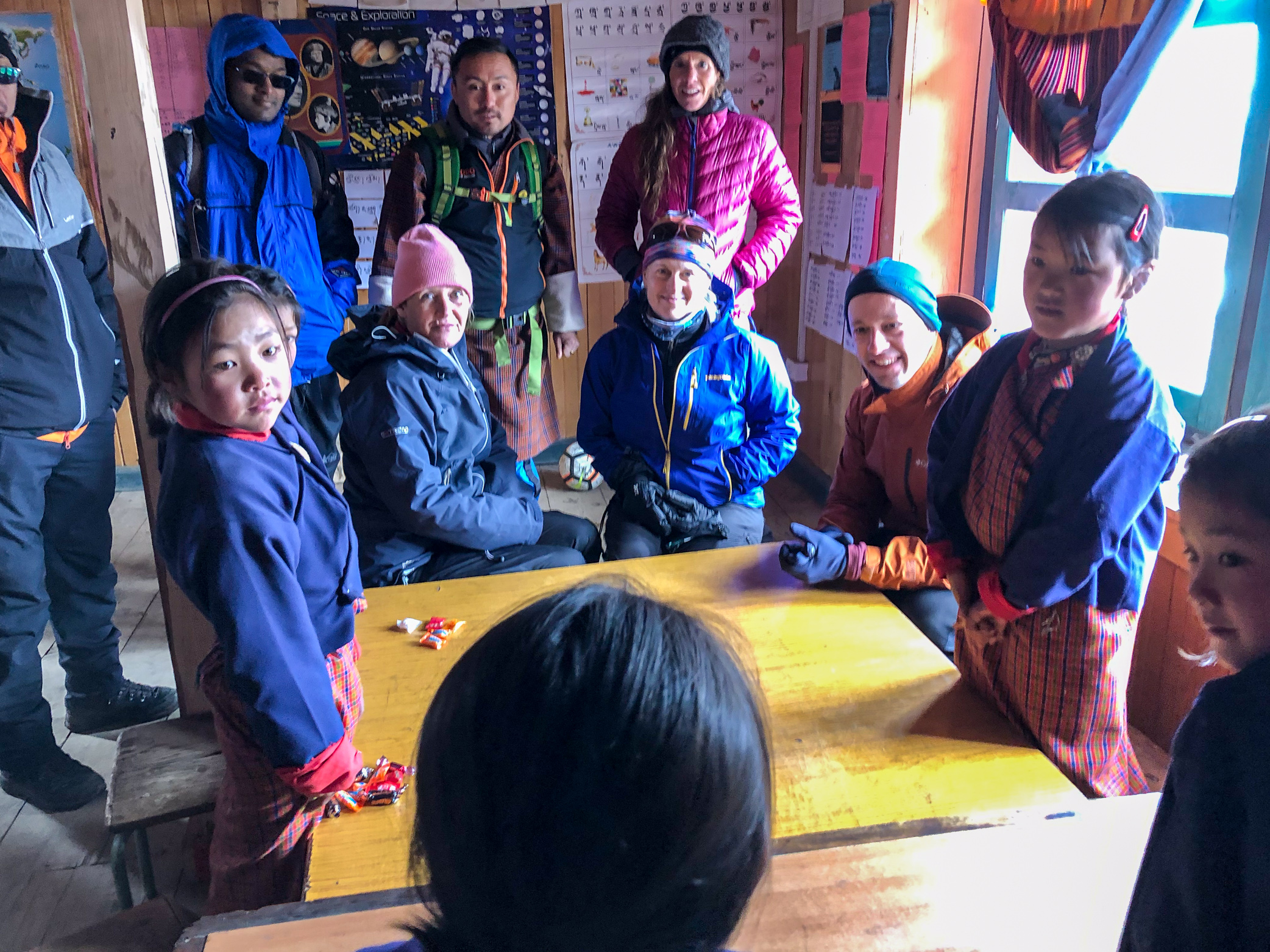
Further up the valley, we stopped at a small local school—“School Among Snow Leopards.”
The children—all girls—gathered together and sang for us.
We had brought a soccer ball, and after the singing we went outside and kicked it around with them.
At first they were shy, but slowly they warmed up—laughing and joining in.
It didn’t take long before the language barrier didn’t matter at all.
From there, we continued the gradual climb toward base camp.
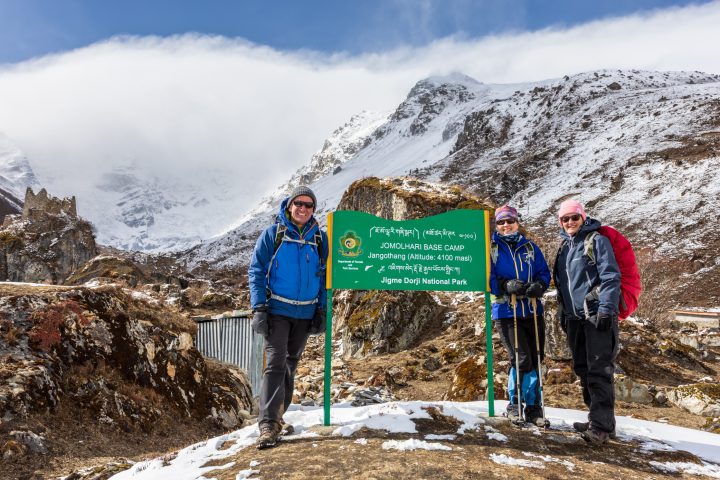
A sign along the trail confirmed we had finally made it.
Arrival at Jomolhari Base Camp
By the time we arrived, sitting at just over 13,000 feet beneath one of Bhutan’s most sacred mountains, it felt like we had truly entered the high Himalayas.
We unpacked our gear and set up our tents for the night—not realizing at the time that we would end up staying here a little longer than expected.
Once camp was set, I grabbed my camera and headed out to explore the area.
The light was getting close to golden hour, and it was an incredible place for photography. While the others gathered in the nearby stone hut to relax, I wandered around camp looking for compositions.
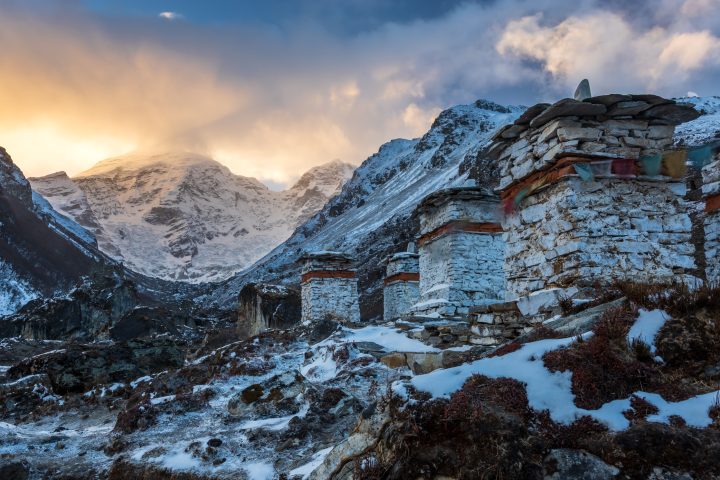
I kept coming back to a group of stone structures just below our camp—chortens, traditional Buddhist monuments—set against the backdrop of the mountains.
There was something about the combination of the weathered stone, the prayer flags, and the snow-covered peaks behind them that made the whole scene feel both rugged and spiritual.
Standing there at over 13,000 feet, it felt higher and more remote than anything we had experienced before.
A Warmer Night
That night—our second of the trek—we had dinner in the stone hut and spent some time talking, playing Uno, and sipping hot tea to stay warm.
Eventually we made our way back to the tents for the night.
Unlike the previous night, we weren’t nearly as damp, and with replenished hot water bottles we stayed warm and slept well.
At least for part of the night.
At some point, the local dogs that always seemed to be hanging around base camp erupted into a full-on barking frenzy. It wasn’t just a few random barks—it went on for quite a while and sounded pretty intense.
The next morning, Tandin told us they were probably scaring off a snow leopard or some other animal that may have been lurking around camp.
By daylight, though, those same dogs were sprawled out on big sun-warmed rocks, sleeping like they hadn’t caused any trouble at all.
Tandin laughed and called them “solar dogs”—explaining that they sleep all day soaking up the sun and then burn off all that energy at night barking and carrying on.
It was a pretty accurate description.
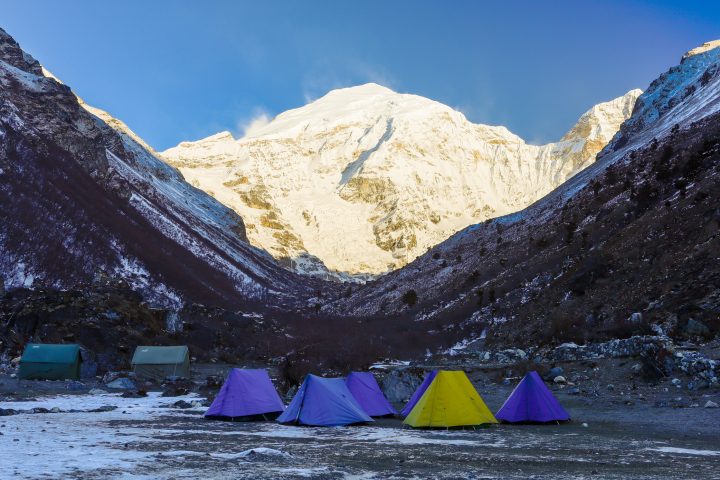
Day 3 – Acclimatization at Tshophu Lake
That first full morning at base camp was sunny with deep blue skies overhead, though it was still a little chilly.
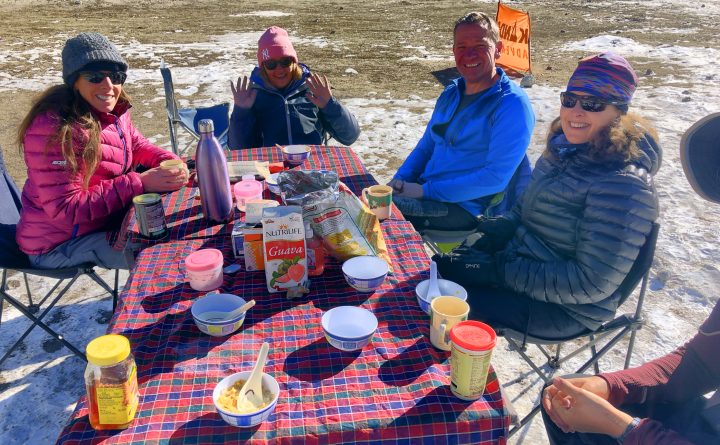
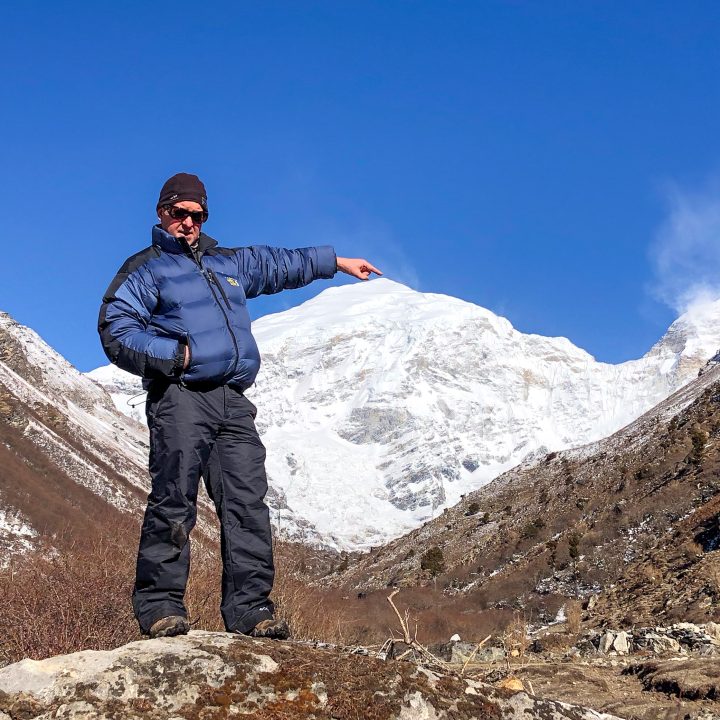
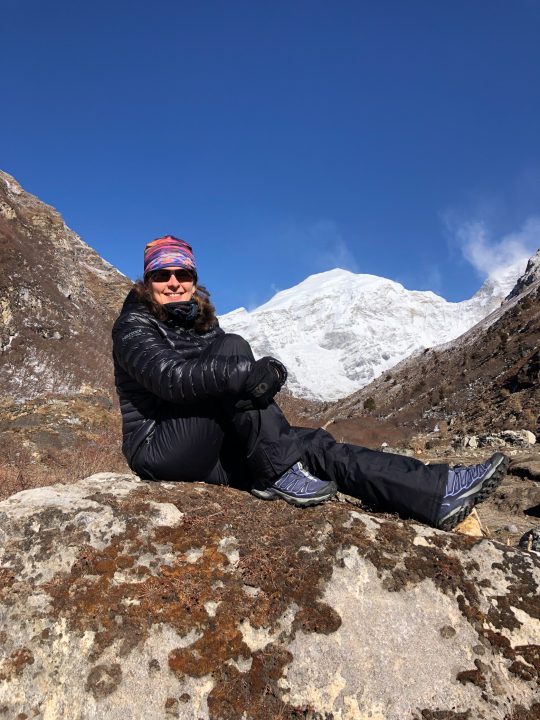
The porters set up a nice table outside where we had a basic breakfast, and we lingered around camp for a while, taking photos with the mountains towering behind us.
Later that morning, we set out on an out-and-back acclimatization hike to Tshophu Lake.
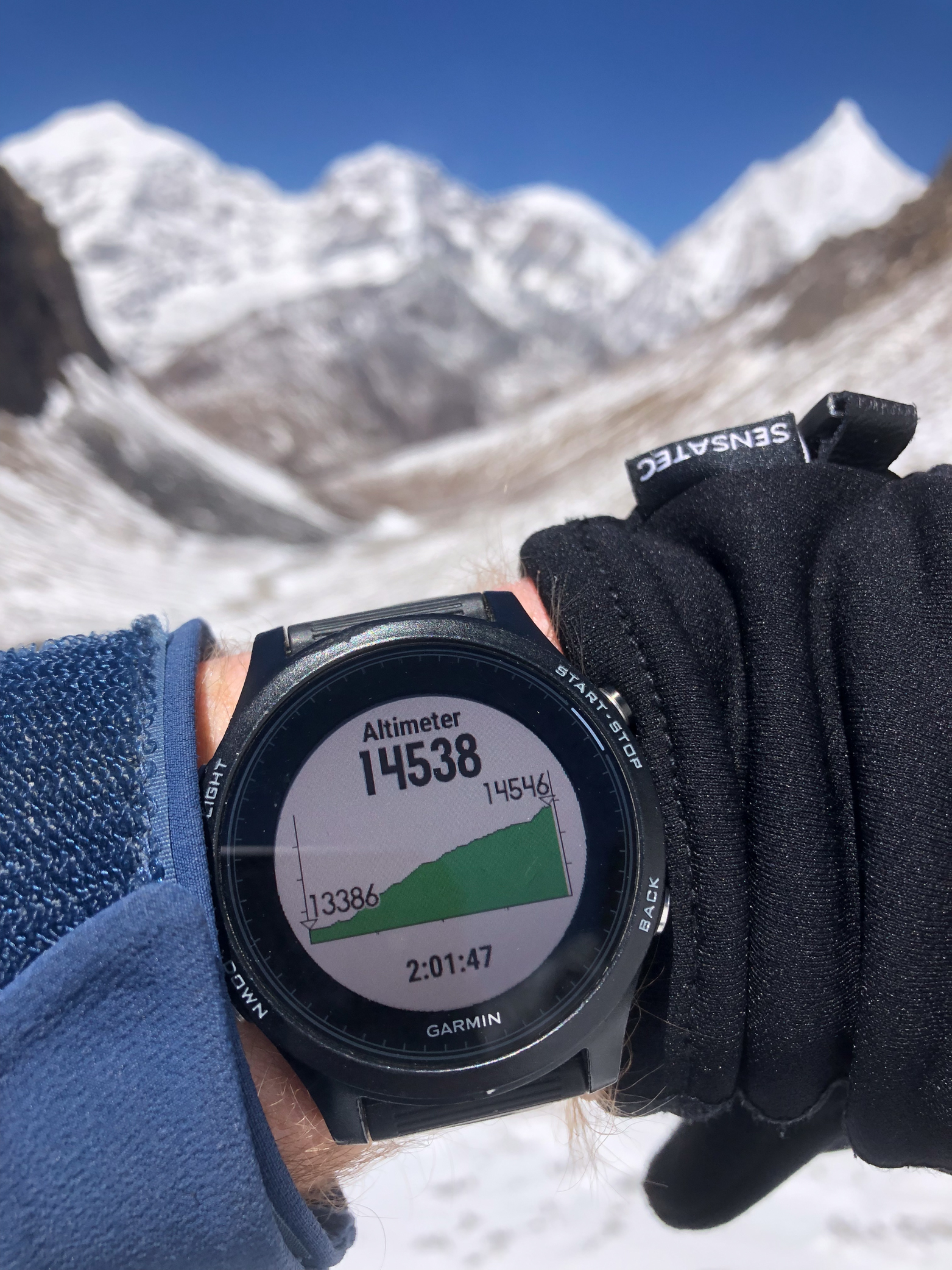
According to my Garmin GPS track:
Distance: 5.6 miles
Elevation Gain: 1,640 ft
High Point: 14,552 ft
The strategy was simple: climb higher during the day, then return to sleep lower at base camp.
There was still quite a bit of snow as we gained elevation, and by the time we reached the lake, it was completely frozen.
The hike began under a brilliant blue sky. Snow from the previous day’s storm still coated the mountains and the entire valley looked like a postcard.
We climbed steeply up the mountainside above camp. The trail was icy in places, so I pulled out my microspikes, which made the climb much easier.
The higher we climbed, the more dramatic the views became.
Soon we had an incredible vantage point overlooking both Mount Jomolhari and Jichu Drake, two massive Himalayan peaks towering above the valley.
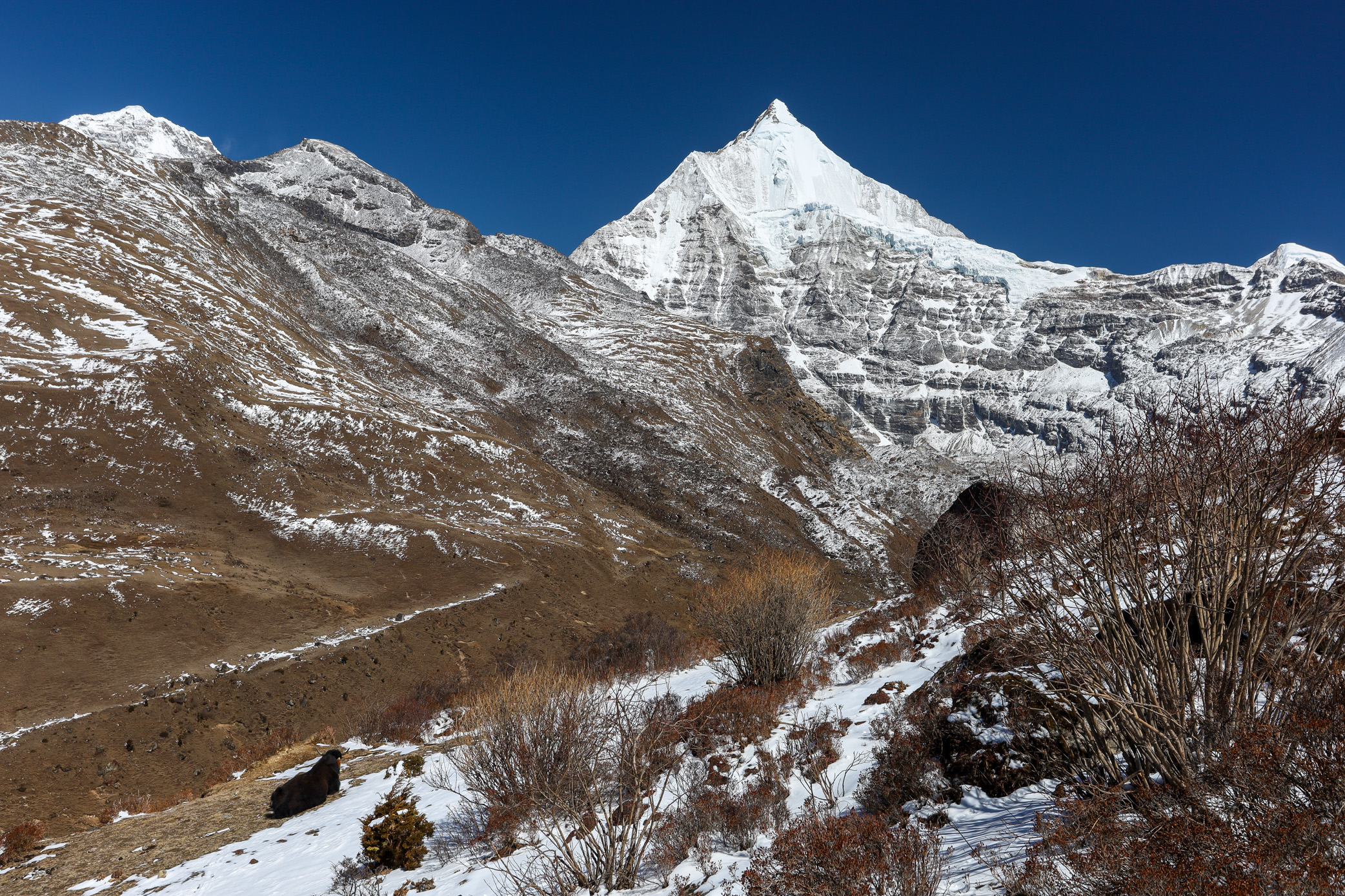
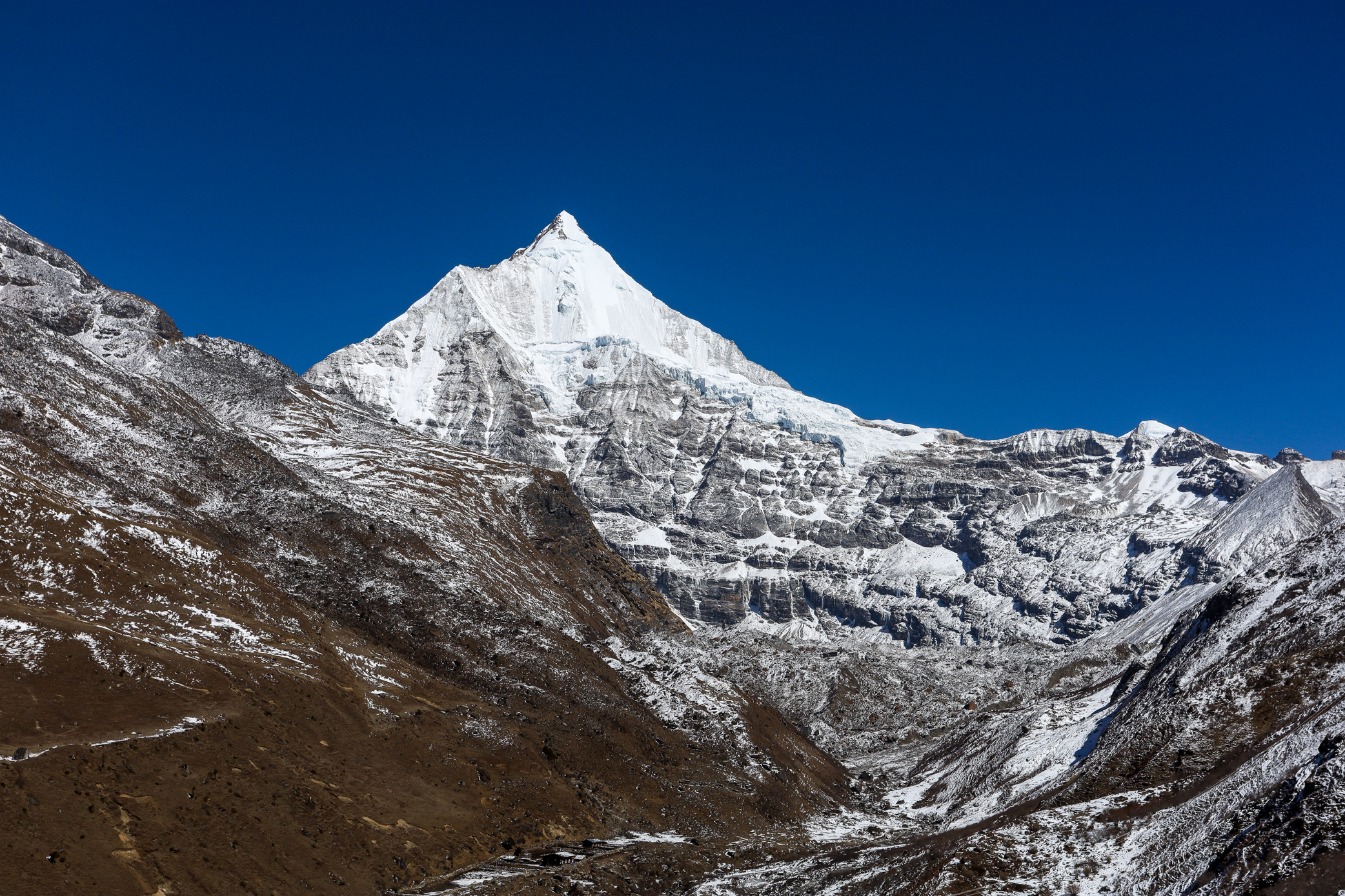
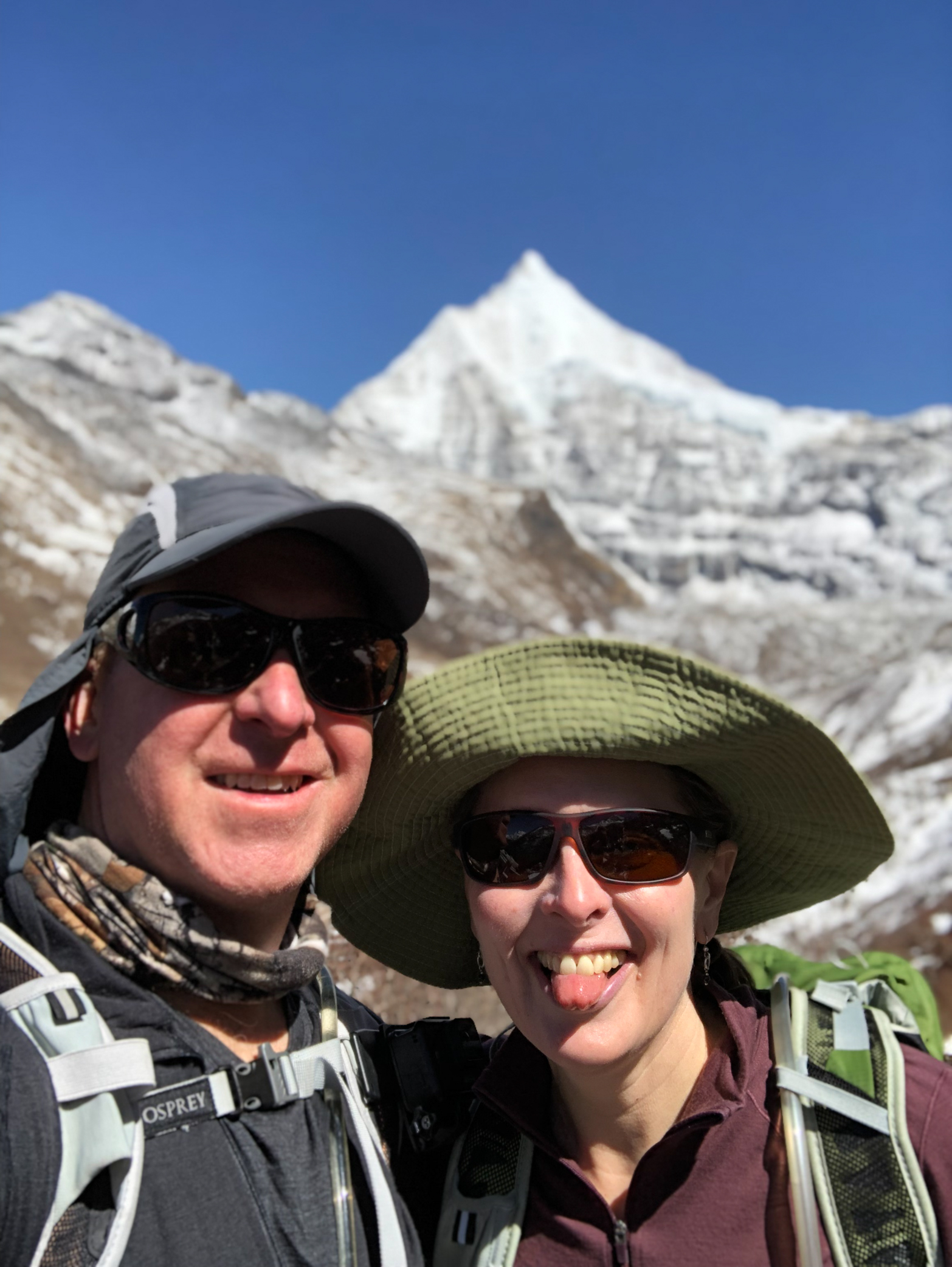
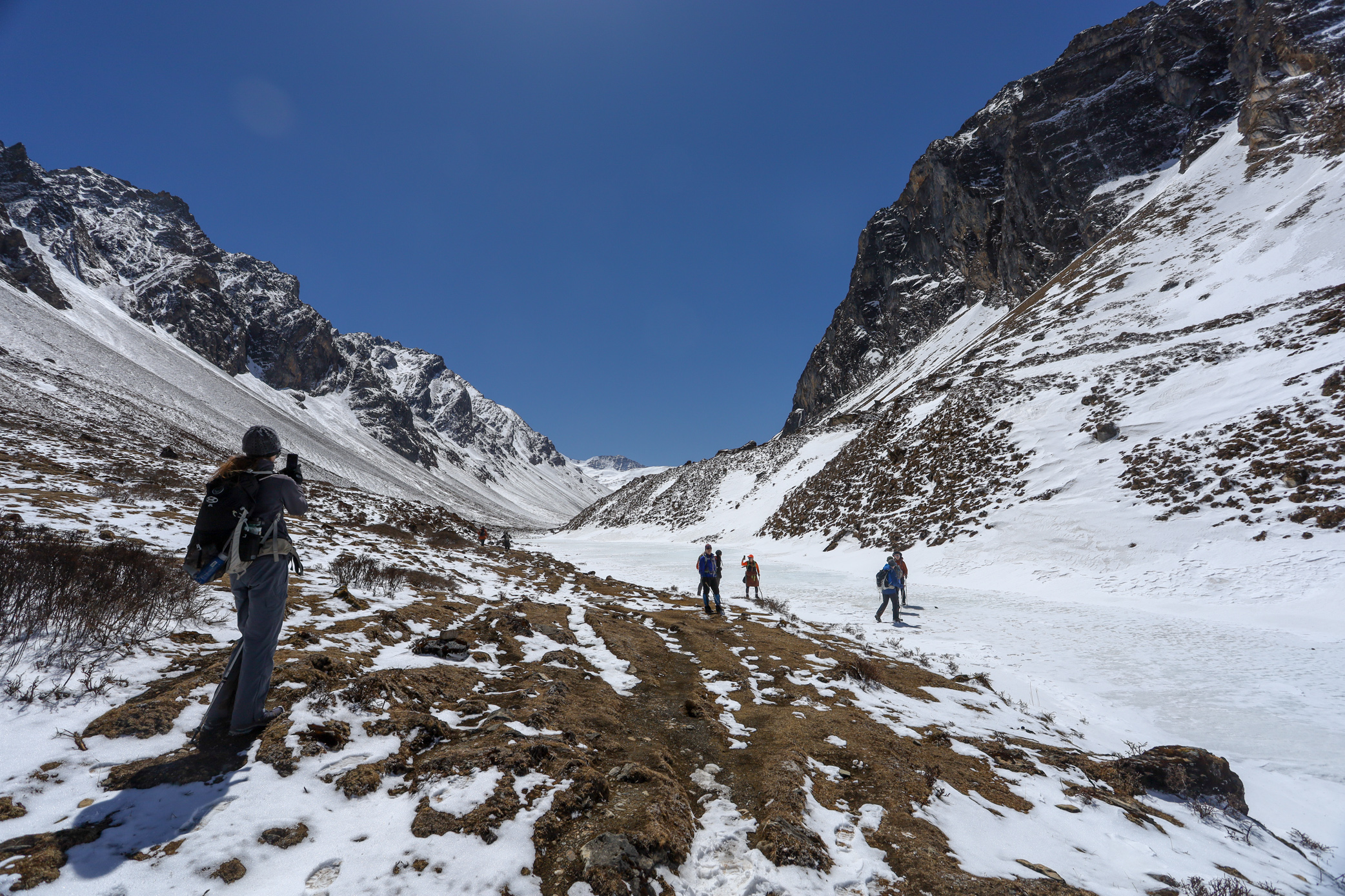
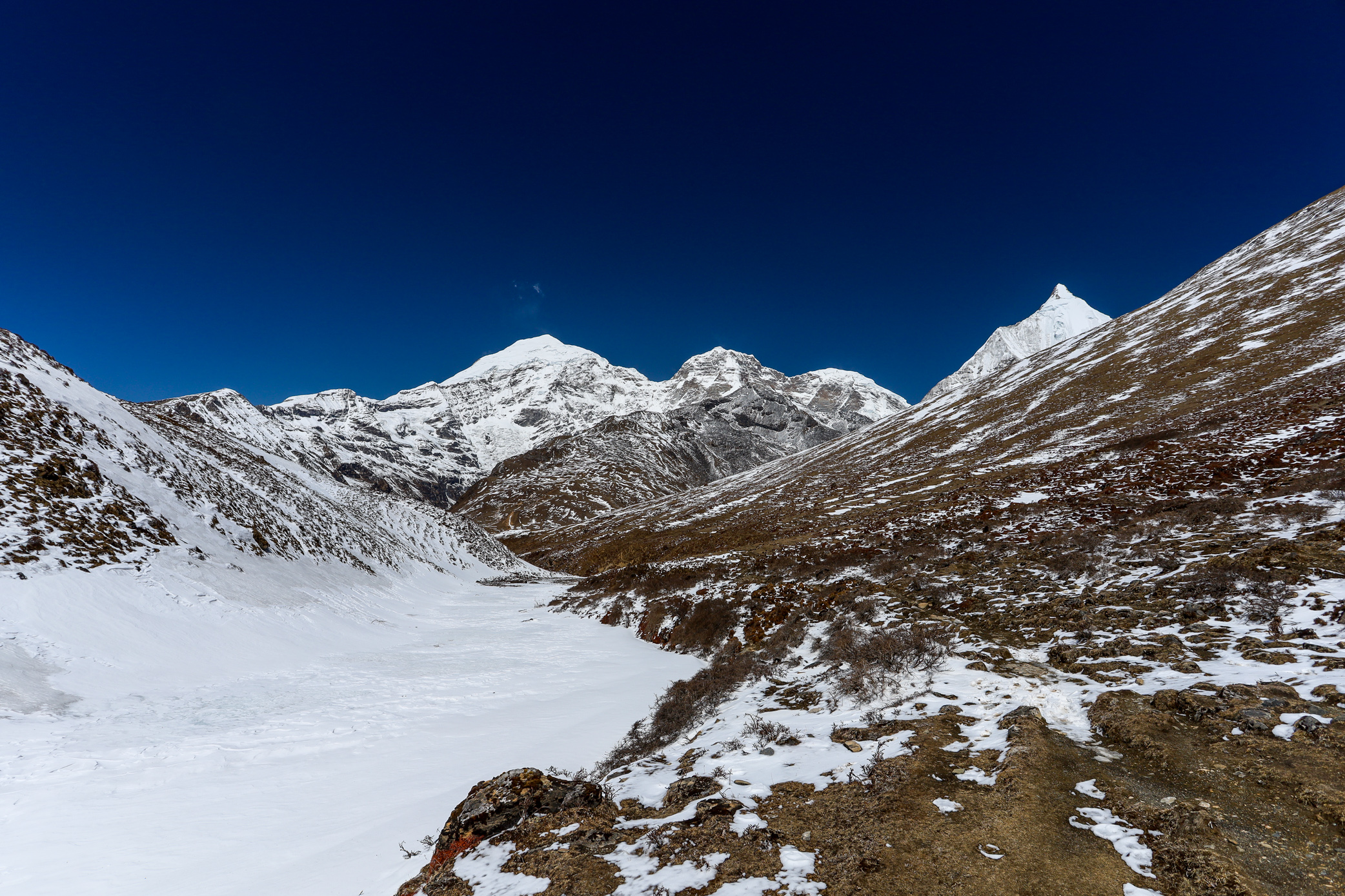
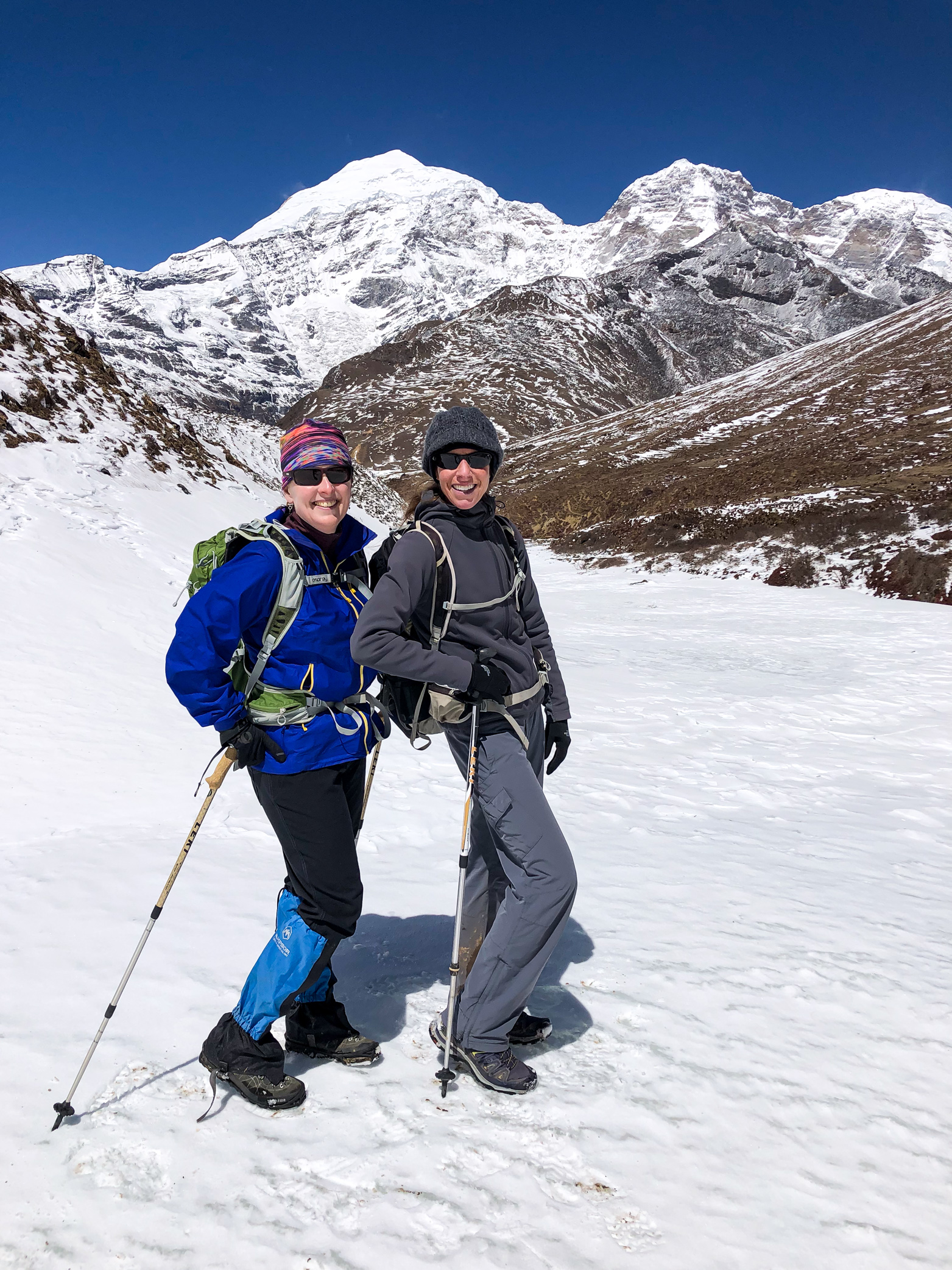
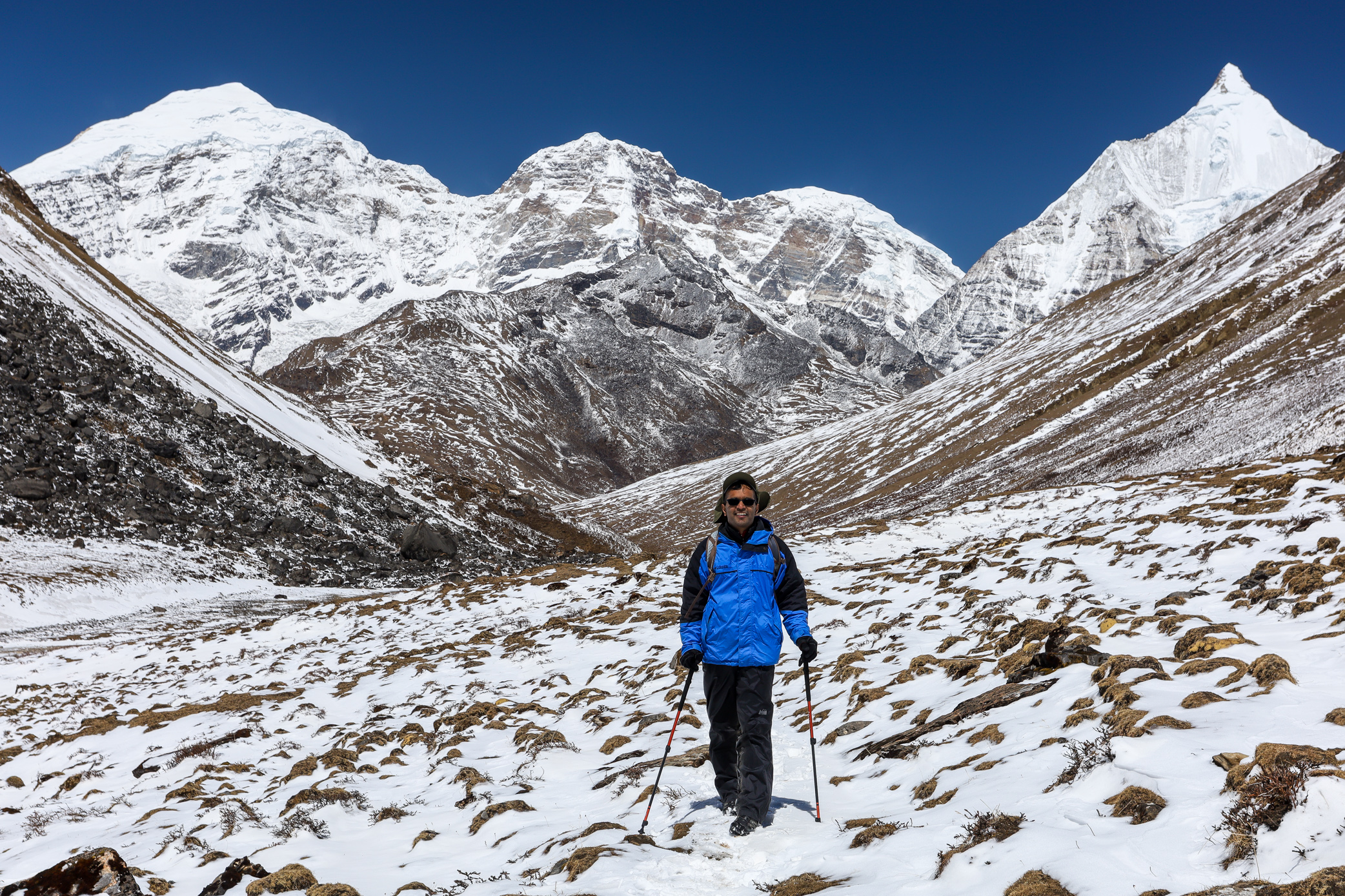
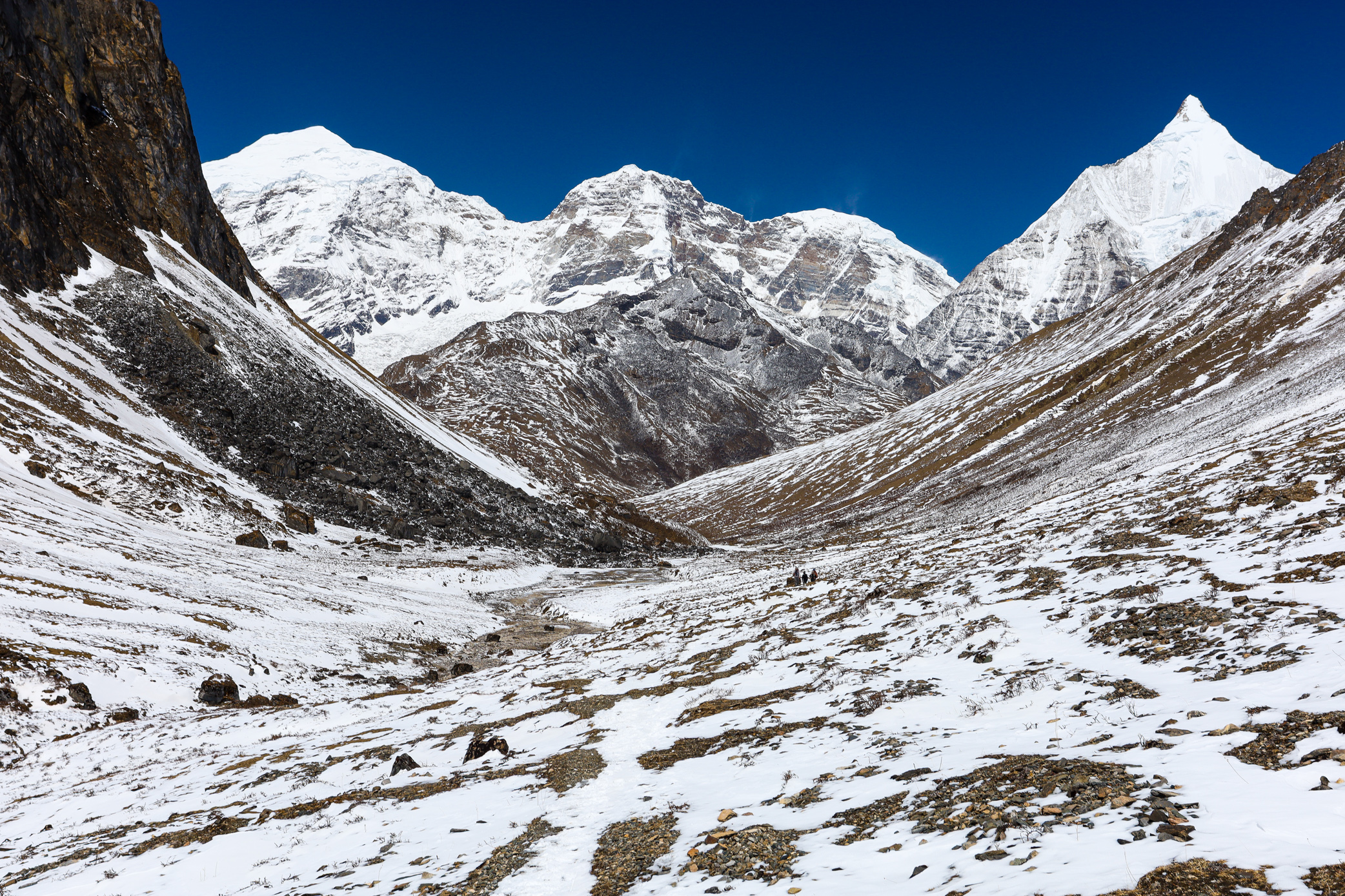
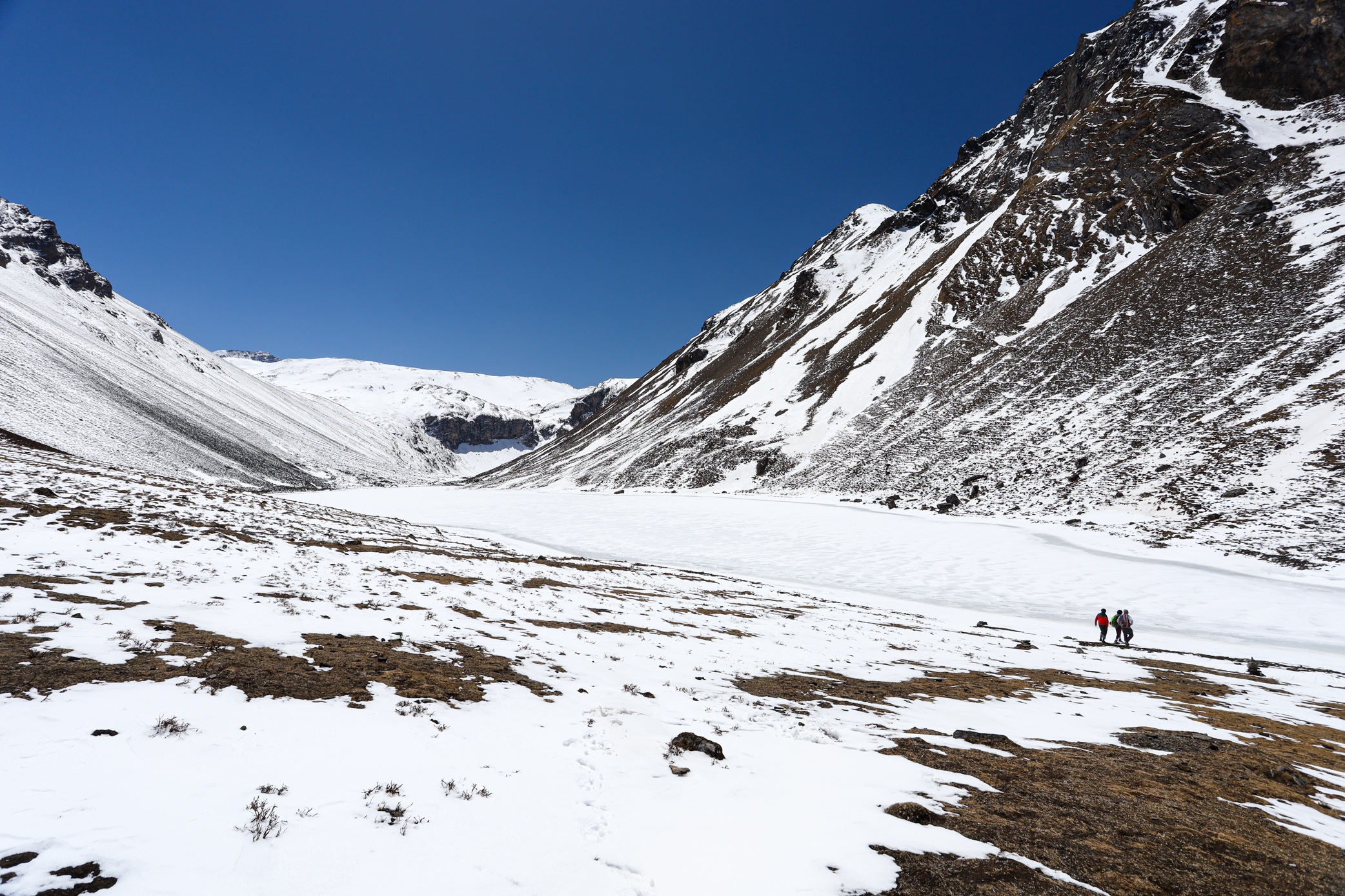
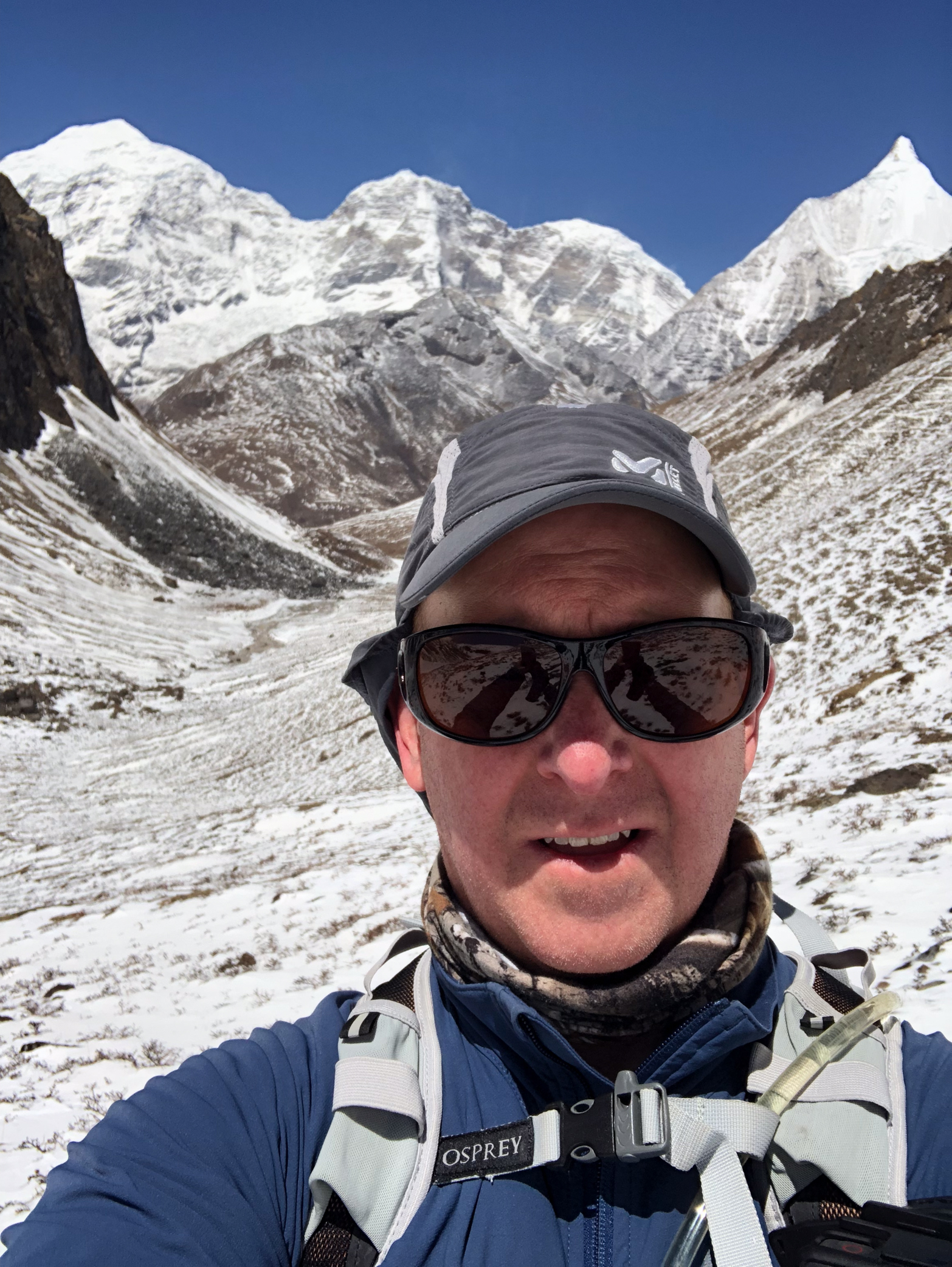
Eventually we reached the lake itself, frozen solid beneath the clear blue sky.
Some members of our group explored the lake while I climbed a nearby ridge to capture photos from higher above.
Back at Camp for Lunch
When we returned to camp, the porters had another meal waiting for us.
And somehow, it just kept getting better.
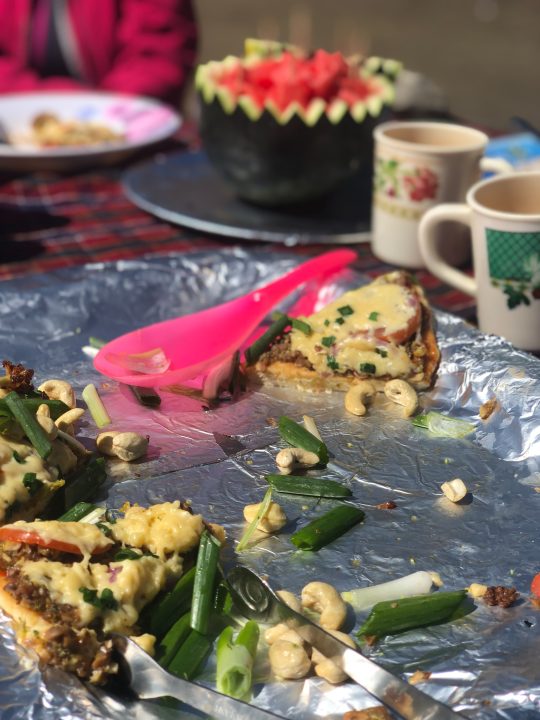
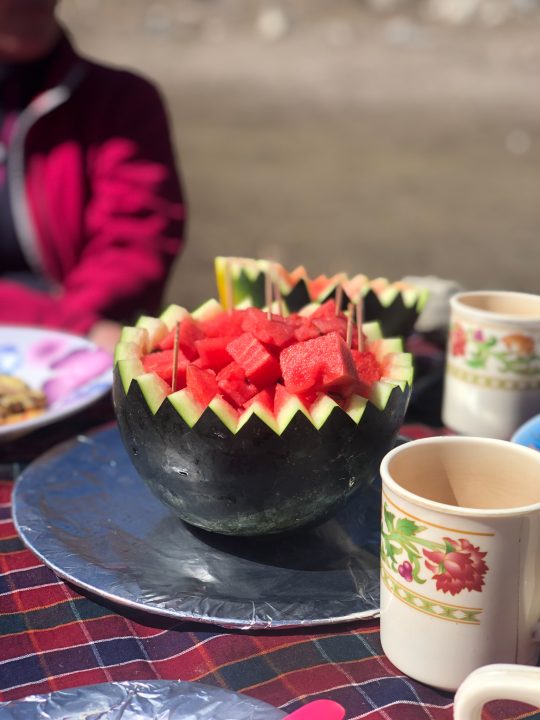
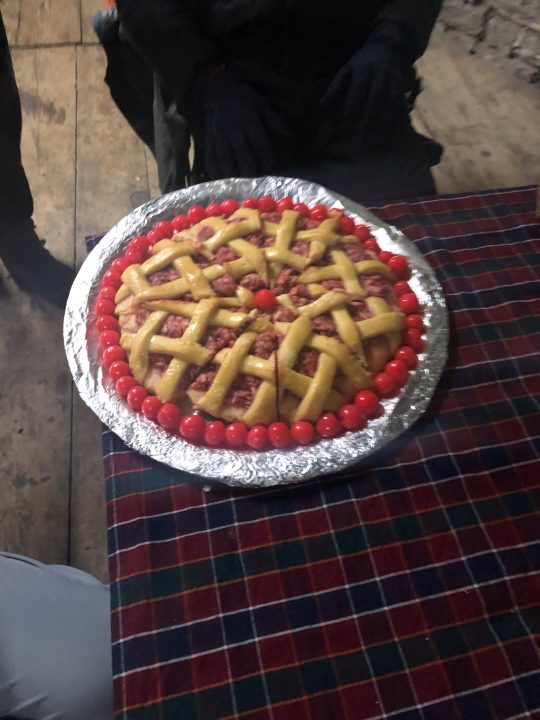
Lunch that day was pizza—topped with ground meat, cheese, cashews, green onions, and tomatoes.
They even served watermelon, cut in a zigzag pattern and cubed inside.
It was one of those moments where you just had to stop and appreciate what they were doing.
We were in the middle of nowhere, at over 13,000 feet, and they were turning out meals like this.
The porters would hike with us for stretches, then disappear ahead on the trail—only to somehow have everything ready by the time we arrived.
It never stopped being impressive.
A Warm Afternoon at Camp
The rest of the afternoon was relaxed.
The sun had warmed things up considerably, and for the first time since arriving it actually felt comfortable just sitting outside.
I found a nice rock down by the stream, stretched out in the warm sun, and ended up taking a little siesta.
After the cold and damp conditions earlier in the trek, it felt amazing.
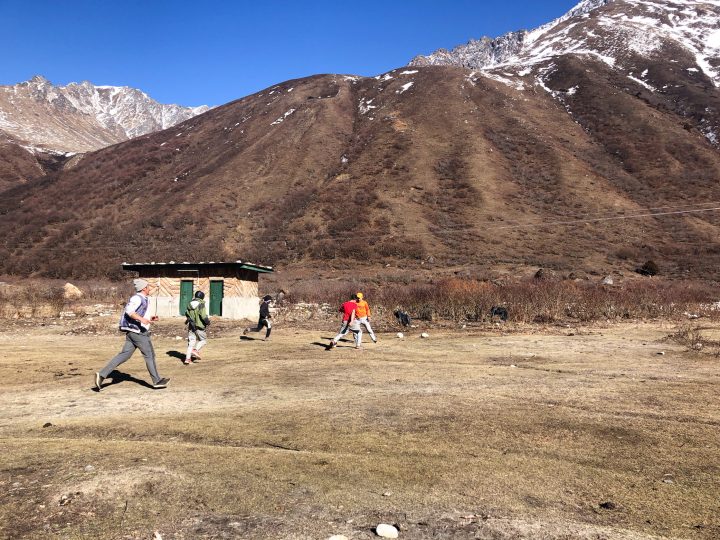
Back near camp, the porters and guides played a little game of soccer, and everyone seemed to be enjoying the warm weather after a couple of cold, wet days.
A Change of Plans in the Mountains
Later that day, we found out we would not be able to make it all the way through to the end of the trek after the upcoming pass.
The snow higher up had changed conditions on the route, and what had originally been planned as a point-to-point trek would now have to be adjusted.
Around the same time, we learned that a group of Chinese women trekking in the area had gotten split up in the mountains due to an avalanche.
A couple of them had been turned back and ended up staying at our camp. We shared food with them and gave them blankets so they would have somewhere warm to sleep that night.
The others were still out on the mountain and eventually had to be rescued by helicopter.
It was a sobering reminder of how quickly things could change out here.
Even though the trek had felt manageable for us, the conditions higher up were clearly more serious than they seemed.
Instead of moving on deeper into the mountains after the pass, we would stay based at Jomolhari and do an out-and-back hike to Nyele La Pass the next day.
It was the right call.
One of the things we came to appreciate in Bhutan was how little ego there was in decisions like that. The guides were experienced, calm, and completely realistic about what the mountains were giving us. Nobody tried to force the itinerary just because it was written on paper.
In the end, it turned out to be one of the best days of the entire trip.
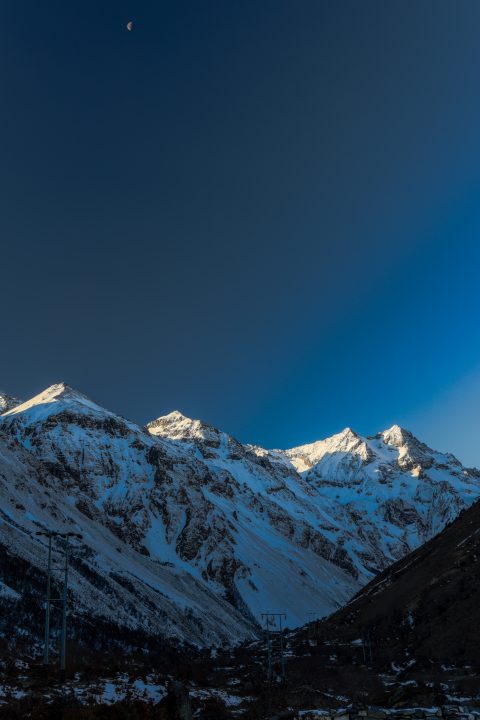
Plans in the Himalayas can change quickly with weather and trail conditions.
Looking Ahead
The next day would take us to the highest point of the trek.
Over 16,000 feet.
